The Designer-Cabinetmaker Partnership: How the Best Projects Get Built
A working note for interior designers and architects. Where the designer-fabricator handoff goes wrong, what the right shop does to make it work, and why the right partnership is the difference between a project that gets photographed and one that becomes a callback.
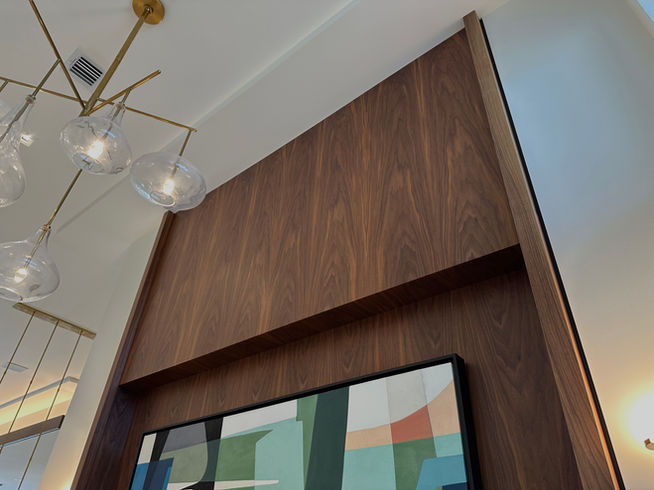
The designer-fabricator partnership is the load-bearing relationship in a custom interior project. The designer specifies what the room becomes. The fabricator translates that specification into something that can be built and stand up over time. When the partnership works well, the project comes together and the homeowner never sees the seams. When it does not work, the project produces callbacks, change orders, and a designer who quietly moves on to a different shop.
This piece is written for trade. Designers and architects who are evaluating new shops, or who have had a relationship break down with a current fabricator and want to understand why. The audience is people who already know how to read a millwork elevation, so we are going to skip the basics.
Where the handoff goes wrong
Most designer-fabricator failures are handoff failures, not fabrication failures. The designer hands off a set of drawings or a specification package, and somewhere between the handoff and the install, something gets lost. The most common patterns:
The shop redrew the design. The shop took the designer’s drawings and “interpreted” them. changed proportions, swapped joinery, substituted materials, simplified profiles. The drawings the shop fabricated from are not the drawings the designer signed off on. The work that comes out is not what the designer specified, and now the homeowner thinks the design is wrong when the design was never built.
The shop did not flag a buildability issue. The designer specified something that cannot be built as drawn. a reveal that needs structural reinforcement, a finish that will not hold on the substrate specified, a hardware spec that does not exist at the size called for. A real shop catches this at the shop-drawing review and offers alternatives. A bad shop builds it as drawn, fails, and blames the designer.
The shop went around the designer to the homeowner. The shop talked to the homeowner directly about a change order, a substitution, or a “small adjustment,” and the designer found out after the fact. The designer-client relationship is now compromised. The designer cannot trust the shop with a future project.
The install was subcontracted. The fabricator built the work and shipped it to a third-party installer who had never seen the drawings, did not understand the design intent, and treated the install as a flat transactional handoff. The work goes in slightly wrong. The designer has to re-intervene to fix it.
What the right shop does
The right shop owns the partnership. Specifically:
Builds to the drawings, period. No “interpretations.” If the drawings require revision because something cannot be built as drawn, the shop comes back to the designer with a clear flag and a proposed alternative. The designer decides. The shop does not modify the design unilaterally.
Reviews the spec for buildability before fabrication. The shop drawings come back to the designer with notes on anything that needs adjustment. Material choices are confirmed. Hardware is sourced and shown. Finish samples go to the designer’s studio before the production finish is applied. The designer signs off on the shop drawings, the materials, and the finishes, and the shop builds from there.
Stays in the designer’s lane on aesthetics. The shop has opinions on craft and joinery. It has fewer opinions on aesthetics, and it does not push them on the designer. If the designer specifies a brass pull, the shop sources the brass pull. The shop does not suggest a substitution because the designer’s choice is “less practical.” The designer chose what they chose for design reasons that are not the shop’s business.
Keeps the designer in the loop on every client conversation. When the homeowner asks the shop a question during install, the shop answers the question and copies the designer. When the homeowner proposes a change, the shop tells the homeowner to talk to the designer about it before the shop does anything. This is the single most important rule in trade work and the most commonly violated.
Installs in-house. The crew that built the cabinetry installs it. Site coordination with the project’s trades runs through the cabinetmaker. Punch-list goes back to the designer cleanly with no finger-pointing.
Does not market to the designer’s client. The shop does not name the designer’s client in case studies. Does not solicit referrals from the homeowner during the project. Does not include the project in marketing without explicit written permission from the designer. Does not put the homeowner’s address in any public material.
What designers should look for
If you are evaluating a new shop for trade work, these are the questions to ask:
- “Walk me through your shop-drawing review process.”
- “How do you handle a buildability issue you find in our spec?”
- “Who installs the work?”
- “How do you handle change-order conversations with the client?”
- “Can I see a project the same designer worked on with you twice?” (The answer to this one is the most diagnostic. Designers who use a shop more than once trust the shop. Designers who use a shop once and never again do not.)
- “What is your written warranty on the cabinetry?”
- “How do you handle finish samples for designer approval?”
A real trade-quality shop will have clear, specific answers to all of these. A shop that fumbles the answers is a shop that does not have the workflow set up for trade collaboration.
What the right partnership looks like
When the designer-fabricator partnership is working, the project flows through a predictable sequence:
- Initial meeting. Designer presents the spec. Shop reviews scope, timeline, and budget range. Both confirm fit.
- Field measurement. Shop sends a senior person to take measured drawings. Drawings come back to the designer for confirmation against the design intent.
- Shop drawings. Shop produces detailed shop drawings, including any flags for buildability. Designer reviews, redlines, signs off.
- Materials and finishes. Material samples and finish samples go to the designer’s studio. Designer approves. Shop orders.
- Fabrication. Shop builds. Designer is welcome to visit during fabrication and often does, particularly for finish review on the production samples.
- Pre-install site review. Shop and designer walk the site to confirm conditions, trade coordination, and install sequence.
- Install. Same crew that built the work installs it. Designer is on site for the start and the punch-list.
- Punch-list. Any issues get logged, the shop addresses them within an agreed timeline, and the designer signs off the project closed.
This sequence assumes both sides know how to do their job. It also assumes a level of mutual respect that some shops never build with their trade partners.
If you are looking for a fabrication partner in Palm Beach County who works this way, our For Designers and Architects page lays out how we operate. Or contact us directly. We respond within one business day with sample-package next steps.
Related: For Designers and Architects · About the shop · Architectural Woodwork